The collar should remain connected
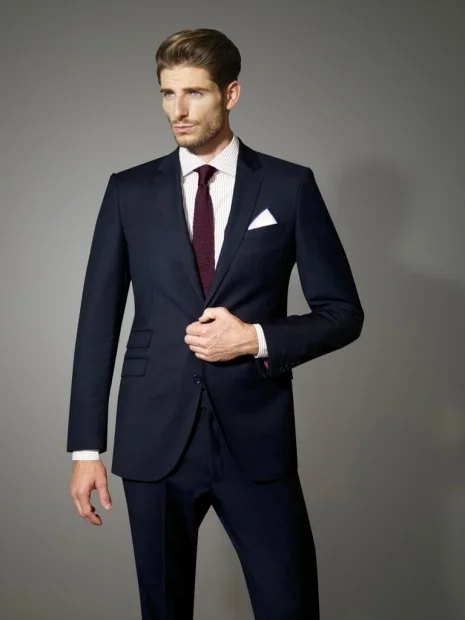
The jacket collar should sit cleanly against the shirt collar without a pronounced gap. A gap may come from posture, shoulder balance, chest shape, or the relationship between the jacket and shirt. Simply reducing the collar is not always the correct solution.
The shoulder sets the architecture
The shoulder should support the intended silhouette without collapsing, extending unintentionally, or creating divots. Natural, soft, and structured shoulders are design choices, but each must still relate to the wearer’s actual shoulder slope and stance.
The chest needs shape and room
The jacket should close without pulling into a strong X while still maintaining a defined line. Excess room can make the chest look hollow, while insufficient room distorts the lapel and front balance. Movement and breathing matter as much as the front view.
Sleeves reveal more than length
Sleeve length determines cuff reveal, but sleeve pitch determines whether the sleeve hangs cleanly with the wearer’s natural arm position. Wrinkles can indicate that the sleeve is rotated incorrectly even when the length is right.
Trousers should follow the body without clinging
The waistband should remain stable, the seat should appear clean, and the trouser line should fall without unnecessary twisting or pooling. Rise, thigh allowance, knee position, opening, and shoe all affect the final line.
A fitting with Akram evaluates these relationships together and separates correctable issues from limits imposed by the garment’s existing construction.
Frequently asked
How much shirt cuff should show below a suit sleeve?
A modest, consistent amount is traditional, but the correct reveal depends on shirt sleeve length, jacket sleeve length, cuff style, and personal preference.
Should a suit jacket feel tight when buttoned?
It should feel secure without restricting breathing or producing strong pulling lines across the button. The intended cut can be close without being strained.
Can shoulder fit be altered?
Some shoulder corrections are possible, but they can be complex and may affect the sleeve, chest, collar, and balance. An in-person assessment is essential.